Signals: What to Notice
Understanding how your body and environment shape your choices around food
Signal: Hunger and Fullness
What to notice across a normal workday:
Pay attention to how hunger arrives before lunch, how fullness lands after eating, and what happens in the afternoon slump. Notice the gap between physical hunger and habit-driven eating. These signals are worth observing without judgment—they are information.
What does your body actually need at 3pm? Is it food, water, movement, or a moment? The more you notice, the clearer the pattern becomes. This is where personal tuning begins.
Tune your settingSignal: Stress and Time Pressure
How rushed moments shape choices (no judgement):
Stress doesn't make you "bad at eating." It changes your nervous system and narrows your choices. When you're rushed, shortcuts are rational. When you're calm, planning feels possible.
Notice how your day's structure—meetings, deadlines, commute—affects what you reach for and when. A stressful morning often leads to skipped breakfast. A tight lunch window leads to quick options. These aren't failures; they're signals about what your routine needs.
Understanding this pattern is the first step toward setting up an environment where calm choices feel easier.
Settings: What to Set Up
Small shifts in your routine that make sustainable choices feel automatic
Setting: Home Defaults
A few small setups that make choices easier:
What's in your kitchen shapes what you eat. If accessible foods align with what you want to choose, decisions become simpler. This isn't about restriction—it's about design.
- Keep easy proteins visible: eggs in the door, tinned beans on an accessible shelf.
- Prep one week staple: chopped vegetables, cooked grains, or proteins ready to combine.
- Have a simple snack setup: nuts, fruit, yoghurt that don't require decisions.
When defaults support your actual choices, you're working with your environment, not against it.
Setting: Supermarket Rhythm
Buying for real life, not for an ideal week:
Most people buy for the life they wish they had. Instead, buy for the life you actually live. If you're busy on Tuesdays, don't buy 6 ingredients that need 30 minutes of prep.
Shop with a realistic list: foods that fit your actual schedule, that you'll actually eat, that require real effort you'll actually make. A shorter list of foods you use beats a long list of intentions.
Setting: Weekend Continuity
Keeping the week sustainable beyond Monday:
Weekends change routines—more time, different rhythms. Use that time wisely: prep one meal component, restock the kitchen, notice what worked and what didn't.
Weekend care creates weekday ease. A 20-minute prep session on Sunday can shape Tuesday's choices. This isn't perfectionism; it's practical support.
Shared Roles: How Responsibility Stays Balanced
What This Means
You're not here to follow a plan perfectly. You're here to understand your patterns and experiment with what works. We're here to support that process, not to grade it.
When something doesn't work, that's information. When you adjust, that's progress. When you get stuck, that's when we dig in together.
Examples: Everyday UK Scenes
How signals and settings work in real life


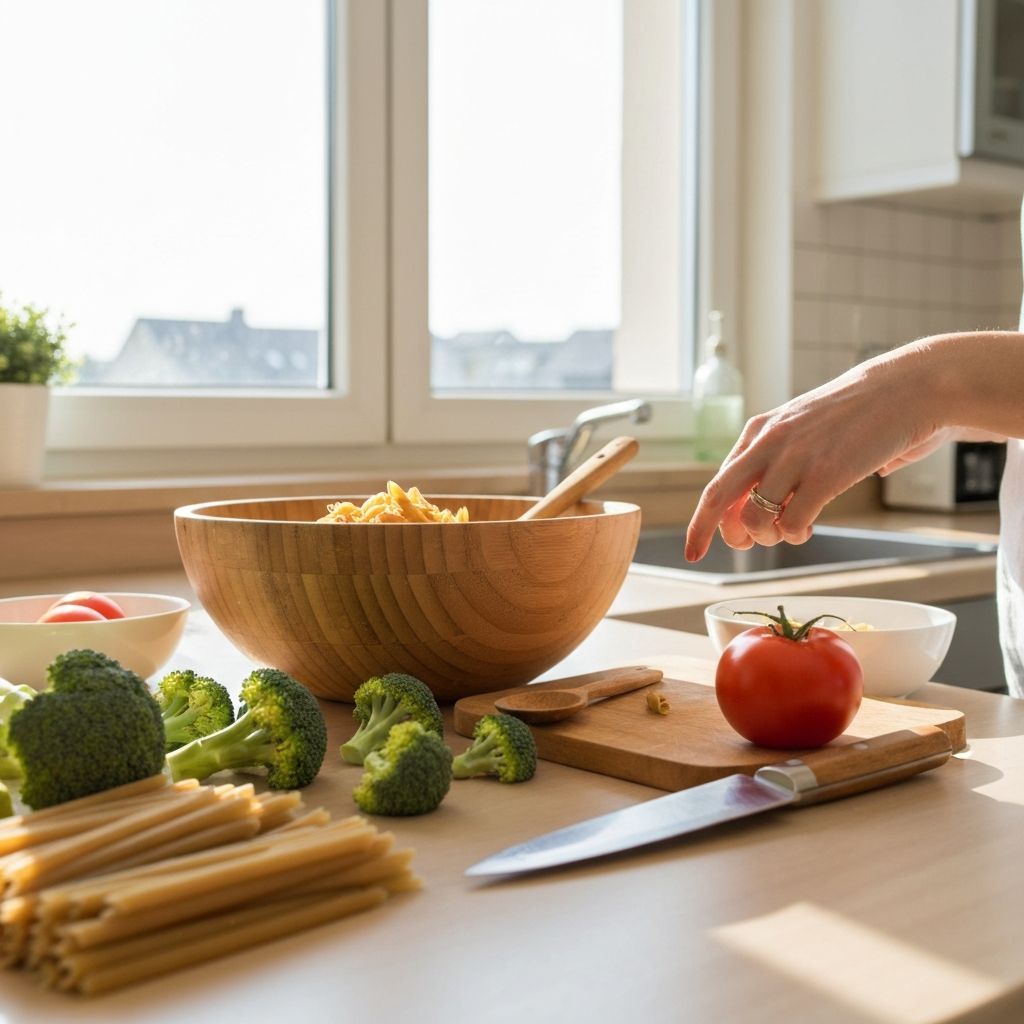

Real patterns, real choices: These moments show what noticing and adjusting look like in everyday life. A shopping list made at the table—that's noticing what you actually have time for. Choosing vegetables with intention—that's setting up an environment. Sharing a meal without pressure—that's sustainable partnership with food.
The Process: Shared Tuning
How we work together:
Clarify
Understand your actual life and goals
Observe
Notice signals without changing yet
Adjust
Make one small setting change
Support
Check in and solve problems together
Review
Learn from what happened and adapt
About Ricsteady
Our Approach
Ricsteady is a nutrition-focused advisory blog project that works in partnership through dialogue, adaptation, and steady support. We don't promise quick fixes or dramatic transformations. We work with real life: busy schedules, competing priorities, and the gap between intention and action.
Good nutrition isn't about perfection. It's about building steady habits that fit your actual life. It's about understanding your signals and setting up an environment where your choices align with what you value.
Our role is to help you notice, adjust, and continue. To listen, suggest, and adapt. To be honest about what's possible and to work at your pace.
Reflection Questions
Before you get started, consider these questions:
- What does "steady" mean to you? Not ideal—what actually feels sustainable in your life right now?
- What signals are you already noticing? About hunger, energy, stress, or how food makes you feel?
- What's one small setting that might make a real difference? One change that fits your actual life?
- What support would help? Someone to check in with? Permission to adjust as you go?
- What does partnership mean to you? How would you want to be supported?
Get in Touch
Questions or ready to start a conversation about shared nutrition work?
Health Disclaimer
The information presented on this website is exclusively informational in nature and is not medical advice. It is not intended to diagnose, treat, cure, prevent, or manage any disease or health condition. This content does not replace professional medical consultation, diagnosis, or treatment.
If you have existing health conditions, take medications, or have concerns about your health, please consult a qualified healthcare professional before making significant changes to your nutrition or lifestyle. Ricsteady works as an advisory guide for general nutrition habits and routines. Individual results and needs vary.